A week in El Oriente: Santiago de Cuba, Baracoa, Guantánamo, and Pico Turquino.
20 04 2008Day 1: La Habana & El Tren “Especial” // We arrived at the train station in Centro Habana at 5:30 p.m., plenty of time to confirm our tickets and get food for our scheduled 7:00 departure. I’d heard mixed views on the train in Cuba—about fifty percent said I would be better off walking, twenty-five percent didn’t have any idea, and the other twenty-five said that as long as I took the Tren Especial Frances, I’d be all set. At 7:00 there was still no train and at 7:30 they finally announced that we would be delayed because the engine was in the shop. Without any official news besides that announcement, the waiting and gossip games started. I got my information from a cop who was in our same car and occasionally some soldiers, thinking they’d be in the know. At 10:00 the train pulled into the station, but they said the engine was still broken so we waited until midnight to board. By 12:30 we were underway for our twelve hour journey across 800 kilometers.
Day 2: El Tren “Especial” & Santiago de Cuba // Even in first-class, the deteriorating seats made it hard to find a good spot to sleep. The conductor made that even harder by demanding we eat our merienda (snack) at 1:30 a.m. just after many had finally fallen asleep. The train was making a slow pace but at least we were moving. At 10:00 a.m. we arrived at the half-way point and the day continued at a slow pace—and a hot one once the air conditioning began to fail around noon. At 4:00 p.m. the engine broke again and as we waited on the tracks, the operator said we’d just have to wait for a new one. I wandered off to see how far from Santiago we were, but as I was away we literally hitched a ride with another train and I had to run and jump on just as we started moving again. At 6:30 we finally arrived at our destination: 10 hours waiting to buy tickets, 5 hours waiting to board, and a 20 hour trip for less than the distance between Boston and Washington, D.C. It was all worth it though for we finally made it there. I “checked in” to the casa particular that I’d be staying in ($20 per night for two people with breakfast included). We wandered around the city a bit, saw the view from the top of a hotel, and then finally got a good night’s rest.
Day 3: Santiago de Cuba // On April 13 I had the best breakfast I’ve had since leaving the United States—Ester (the owner of the house) cooked us delicious eggs, tomatoes, mangoes, coffee, fresh bread, and better. I knew it would be a good day after that. Our first stop of the day would be Cuartel Moncada, the military base where the Revolution began on July 26, 1953. The gun shots on the outside of it still remain though they’re rumored to be replacements since Batista has the building cleaned up after Fidel’s failed assault. Today, the building serves as a school and a museum of which we had a private guided tour (for free) since we were students. We also visited the Museo de la Lucha Clandestina (Museum of the Underground Fight) which used to house a police station and now has information about all of the sabotage efforts that the 26 July Movement used to overthrow Batista. The rest of the day I spent with some friends who worked at a bookstore near our residence and sampled the local food.
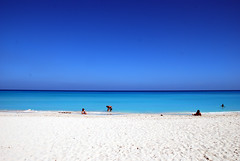
Day 4: Baracoa // We left Santiago at 7:45 a.m. aboard Víazul (the tourist bus) for a five hour trip through the mountains and Guantánamo province to the first settlement of Cuba, Baracoa. I was amazed our bus made it through those mountain roads, but we still arrived on time and without any hassle—something that wouldn’t have been possible if we were traveling under our Cuban residency. Unfortunately, that also meant the entire town of Baracoa seemed to come and greet us at the bus station offering taxi rides (on bikes) and cheap rooms for the night. Add in the oppressively hot weather and it was nearly impossible to breathe. I finally found a place to stay for a great price since I was a temporary resident and student. Our first stop was the Bahía de Miel and the black sand beaches that line the town. Afterwards, we enjoyed coconut ice cream with a cup of fresh melted chocolate (a specialty of Baracoa) for about 5 cents. For dinner, we went to an old fort right on the Bahía de Baracoa that was completely deserted, but well staffed. After about an hour, my Enchilada de camarones (shrimp in a tomato base) showed up and we enjoyed the ocean breeze.
Day 5: Baracoa & Santiago // Being one of the easternmost parts of Cuba, Baracoa has the privilege of seeing the sun 45-minutes earlier than Havana and for that occasion I woke up at 6:00 a.m. Despite a bit of cloud cover, it was a pretty impressive sight and equally impressive was to see the town wake up along with the sun and begin moving around by 6:45. My next stop was to get on the lista de espera (standby list) for the 2:00 bus back to Santiago and then enjoy breakfast before biking around the town. There’s not too much to do in Baracoa so I think I spent the right amount of time there. Still, I got a chance to see the monument to Hatuey (the first American rebel who led a failed uprising in Cuba against Spain in the sixteenth century), el Yunque which literally looks like an anvil, stop by the firehouse, and get a view of the city from el Castillo. After a five hour bus ride, we arrived back at Ester’s house in Santiago and it felt like I was coming home.
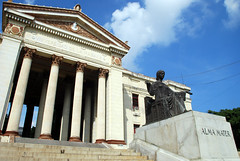
Day 6: Santiago // We got up early to rent mopeds so we could see the whole city and thought we’d be all set only to find out that they were mysteriously broken since we only wanted them for a half day. Instead, we walked around and took a taxi when we needed too. The first stop was right near our casa, the Museo Municipal Emiliano Bacardí which houses all sorts of historical artifacts and artwork relevant to Santiago from the pre-colonial days to the Revolution. They had a lot more than I thought they would about the Tainos, but unlike most of the museums I’ve been too there wasn’t as much written information so I had to ask more questions of the curators who generally knew everything. Unfortunately, I couldn’t take pictures except of two things, but there was really a lot of unique artifacts and artwork that I think are deteriorating because they aren’t in a climate controlled environment. The next stop was the Cementerio Santa Ilfigenia which houses the remains of important figures in Cuban history most notably José Martí who has an honor guard present twenty-four hours per day and fresh flowers delivered daily. That night we had dinner at Ester’s—fresh fish, fried sweet plantains, rice and beans, and salad. Probably the best dinner I’ve had here and all for $5.
Day 7: Pico Turqunio // Waking up at 3:30 a.m., we began the drive to Pico Turquino at 4:00 in a “Jeep” which ended up being an old Lada like everything else. The highway in that part was wiped out a few years ago in a Hurricane and there are literally sections of it that washed out to sea forcing drivers to take a makeshift dirt road at times. Every time we saw a mountain we thought that was it, but then around the bend we’d just see another taller one. Finally, we saw Pico Turquino though the summit was still covered by the clouds. We started hiking at 8:00 a.m. and made the grueling 11 km hike with a vertical of 2 km in just about 4.5 hours. Arriving at the top was one of the best feelings I’ve ever had—just seeing the José Martí statue made me start sprinting until we were there. We slept for a few minutes until we were rudely awoken by our guide to begin the descent. I thought that was going to be the easy part, but by just a few kilometers I was beginning to loose feeling my legs and with 4 km to go I was ready to give up. We made it to the bottom—finally—at 7:00 just in time for a three hour drive in the cramped Lada back to Santiago. Ester almost fell out of her chair laughing at our faces when we stumbled through the door. All I can say though is it was worth it. We set a goal, met it, and now anytime says they were somewhere with a view in Cuba, we know we’ve been to the highest point.
Day 8: Santiago de Cuba & Víazul // My last day in Santiago was spent sleeping in and recovering from the hike to Turqunio until about 11:00 a.m. followed by another delicious breakfast from Ester. With just a few things on the agenda, I set out to see the Colegio Jesuito where Fidel went to high school which had a few things on display in a makeshift museum and continues to this day functioning as a high school (though of course it’s no longer private). My last stop was the firehouse which was closed for renovation so I had to go to the central station in a taxi. The Fire Department is part of the Ministry of the Interior and considered a part of the military. For this reason, firehouses aren’t open to the public and the chief wouldn’t let me in nor accept my gift of a CFD shirt without prior approval from the regional commander. I managed to take a picture, but only from across the street. I had better luck in Havana where I’m planning to spend a night to see what it’s like being a firefighter in Cuba. Anyway, at 6:00 we boarded the 6:00 p.m. express to Havana and watched the Oriente slowly pass us by on the road back west.
Day 9: Víazul & La Habana / I had plenty of time on the 12-hour bus ride to reflect on my trip to Santiago and I did that for awhile until I finally drifted to sleep in the middle of the night only to wake up at dawn in La Habana. I felt like we were in a completely different part of Cuba—just like being in California as someone from the east coast—but loved almost every moment of it. Hiking Turquino was a major accomplishment and learning about the birthplace of the Revolution made everything else worthwhile. Everyone’s told me that people in Santiago are more friendly and relaxed and I found that mostly to be true—especially if you look like you want a taxi. Here I am now in Havana—feeling like I’m back at home, but really so far from there. Now it’s time to get back to classes and explain where I was for the past 10 days. Luckily it rained a few days so I only ended up missing a few classes.
Categories : Travels