- Americano: Someone from America (which is two continents). This is most often used as a way of conveying pan-Latin American identity.
- Babalawo: A priest in Santería.
- Bárbaro: Cool/sweet.
- Batido: Milkshake. Except there’s no milk in Cuba.
- Caballero: Literally “cowboy,” but here it’s a way of saying sir.
- Candela: Literally “flame,” this is Cuban slang for hot in pretty much anyway you could use that.
- Cañonazo: Ceremony that signifies the close of the gates to the cities of Habana and Santiago. While the gates are all gone, they still shoot of a canon each night as a way of preserving tradition (and attract tourists). 9:00 p.m. in Habana.
- Camello: A custom-built semi that is a type of local bus. These came to Cuba during the Special Period when a regular bus was too expensive to import. Instead, Cubans bought Brazilian truck cabs and built a custom bed to carry passengers that resembles a camel because of its two humps. Recently, they’ve been replaced in Habana by German and Chinese buses and you only see them in the provinces now.
- Carné: Short for Carnet de Identitidad which is basically an ID card. Cubans tend to not pronounce the last part of words so “carnet” is simply carné. In this case, the pronunciation became a way of spelling too (both forms are used).
- Carpeta: Reception desk.
- Casa particular: Literally this translates to “private house,” but in Cuba this refers to a home which is licensed to rent rooms to foreigners. Often these are the best places to stay—where you’ll find the best accommodations, best service, and best food—because people have a direct stake in you enjoying your visit.
- CDR: Committee for the Defense of the Revolution. A watch group that’s broken into zonas and serves the greater mission of defending Cuba, but more realistically keeps an eye on people to make sure that they support the revolution. For example, the state doesn’t force you to go to demonstrations, but if you miss an important one, you’ll probably be asked about it at a CDR meeting. Your CDR is your most important reference and without its blessing you won’t get a good job.
- Circunvalación: Beltway.
- Coche: Horse-drawn wagon. Not a car!
- Cola: Line (or the soda). There’s a line for everything in Cuba and people are always waiting.
- Cuba libre: Literally “free Cuba,” but in addition to being a patriotic chant, this is the original name for a rum and Coke, the very popular drink that originated on this island.
- Divisa: Convertible pesos (which replaced dollars).
- Extranjero: Foreigner.
- Ferrocarril: Literally “railway,” but really means a system of tracks and trains that works to make sure you get to your destination in the slowest and most inefficient way possible.
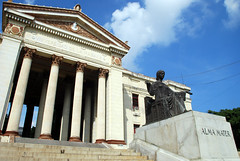
- FEU: Federation of University Students—organizes tons of events geared towards students including intramural sports, lectures, cultural festivals, and concerts. They also elect a member to the National Assembly.
- Filin: “Feeling” music aka slow and romantic songs.
- Fula: Convertible pesos (or foreign remittances).
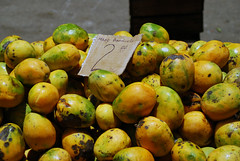
- Fruta bomba: Papaya which in Cuban Spanish means something very different.
- Guagua: Bus.
- Guajiro: Redneck. Seriously.
- Guayabera: Traditional button-down shirt with pleats and often four pockets running down the front of it (two on each side). They’re usually white and anyone who is an official will wear some type of variation of this as their uniform.
- Habano: High-quality, hand-rolled cigar.
- Hacer la botella: To hitchhike.
- Jaba: Plastic bag. Impossible to find when you want one and therefore something worth saving.
- Jonrón. Home run (baseball).
- Máquina: Literally “machine,” but in Cuba this refers to the old U.S. made cars to still cruise the streets. Particularly, this refers to taxis that are supposed to only be used by Cubans. They travel fixed routes and pick up as many passengers as they can along the way (usually about 6 plus the driver).
- Moros y cristianos: White rice with black beans, Cuba’s national dish.
- Norteamericano: The common term used for people from the United States.
- Paladar: Literally this means pallet, but this term comes from the Special Period when Cuban food was at all time lows so it meant to imply that the food had taste or flavor. Today, this refers to a small-scale restaurant run out of someone’s home authorized to sell food to tourists. Often, paladars will have the best food and service because they have greater incentive to do so. While paladar operators certainly make more money than most jobs, don’t think that the Cuban state doesn’t get its cut either.
- Palestino. Someone from the provinces that comes to work in Habana. Not exactly a compliment.
- Peña: A social gathering often with some type of cultural purpose. The FEU sponsors a lot of these.
- Pizarra: Black board. Every faculty has one of these and it’s used as the formal way to announce events and other information.
- Puro: High-quality, hand-rolled cigar.
- Resolver: Literally, to resolve, but in Cuba this means to get by, doing whatever you can do to survive, often meaning underneath the radar of the state and therefore illegal. This is especially true of university students who receive a small monthly stipend, but since they aren’t allowed to work (you’re either a student or a worker, not both) have to do something to support themselves and often their families.
- Taquilla: Ticket or other similar type of window. No tacos.
- Último: Literally, last. This is most commonly used as a question: ¿el último? which is just asking who’s last in line. Once you find out who’s last you become the last yourself until the process repeats itself. This is the way Cubans have adapted to waiting in line without actually having to wait in line.
- UJC: Union of Communist Youth.
- Vega: Land where tobacco is grown.
- Yuma: The United States. Comes from the movie “3:10 to Yuma.”
Leave a comment